Key takeaways
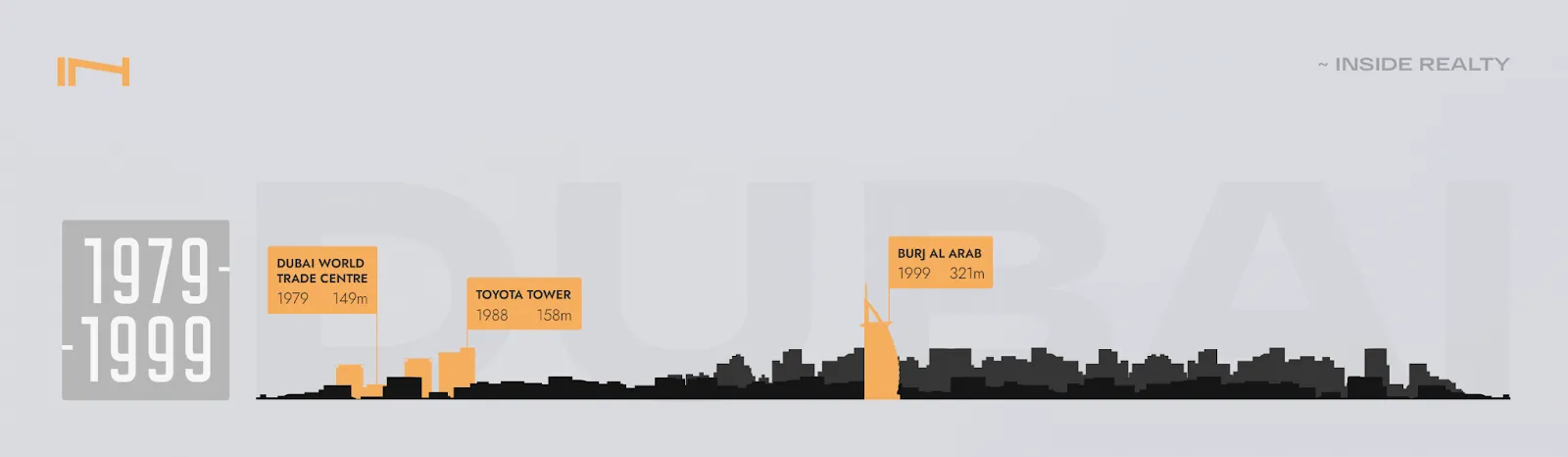
- Dubai's first skyscraper, the Dubai World Trade Centre, opened in 1979 on what were then the city's outskirts.
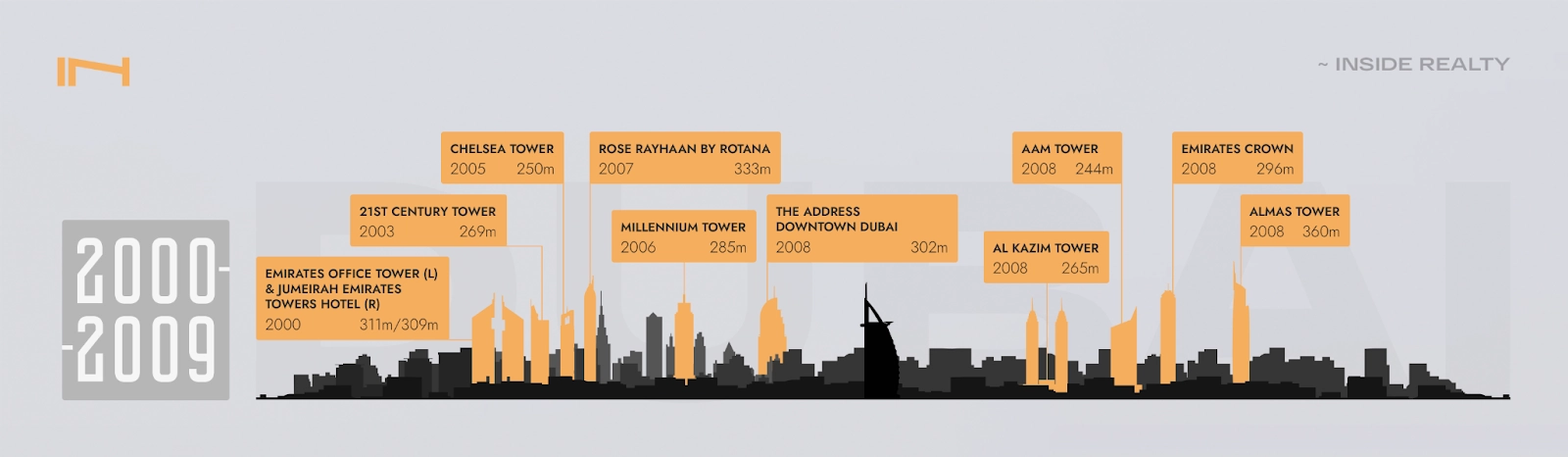
- The title of Dubai's tallest building passed from Burj Al Arab to Emirates Towers, then to Almas Tower and finally to Burj Khalifa.
- Burj Khalifa opened on January 4, 2010, and no building in the world has surpassed its 828-meter height since.
- Burj Azizi, at 725 meters, is set to become the world's second-tallest building and is expected to be completed by 2030.
- Dubai Creek Tower is being redesigned and is unlikely to claim the title of the world's tallest building.
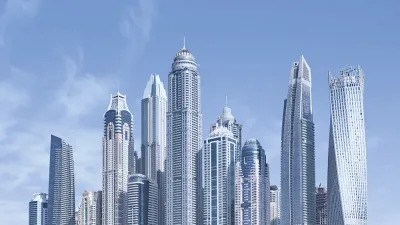
Dubai ranks fourth in the world in terms of the number of skyscrapers. As of mid-2025, the city had more than 250 completed buildings taller than 150m. We decided to explore how Dubai's landscape has been changing and what awaits it in the coming years.
A Chronology of the Tallest Buildings in Dubai
Dubai's futuristic landscape as we know and love it has been around for less than 50 years. Until the 1980s, most of the city was desert.
1979: Dubai World Trade Centre, 149 meters
Dubai's first skyscraper was the Dubai World Trade Centre (DWTC). It was opened by Queen Elizabeth II during her first official visit to the UAE in 1979.
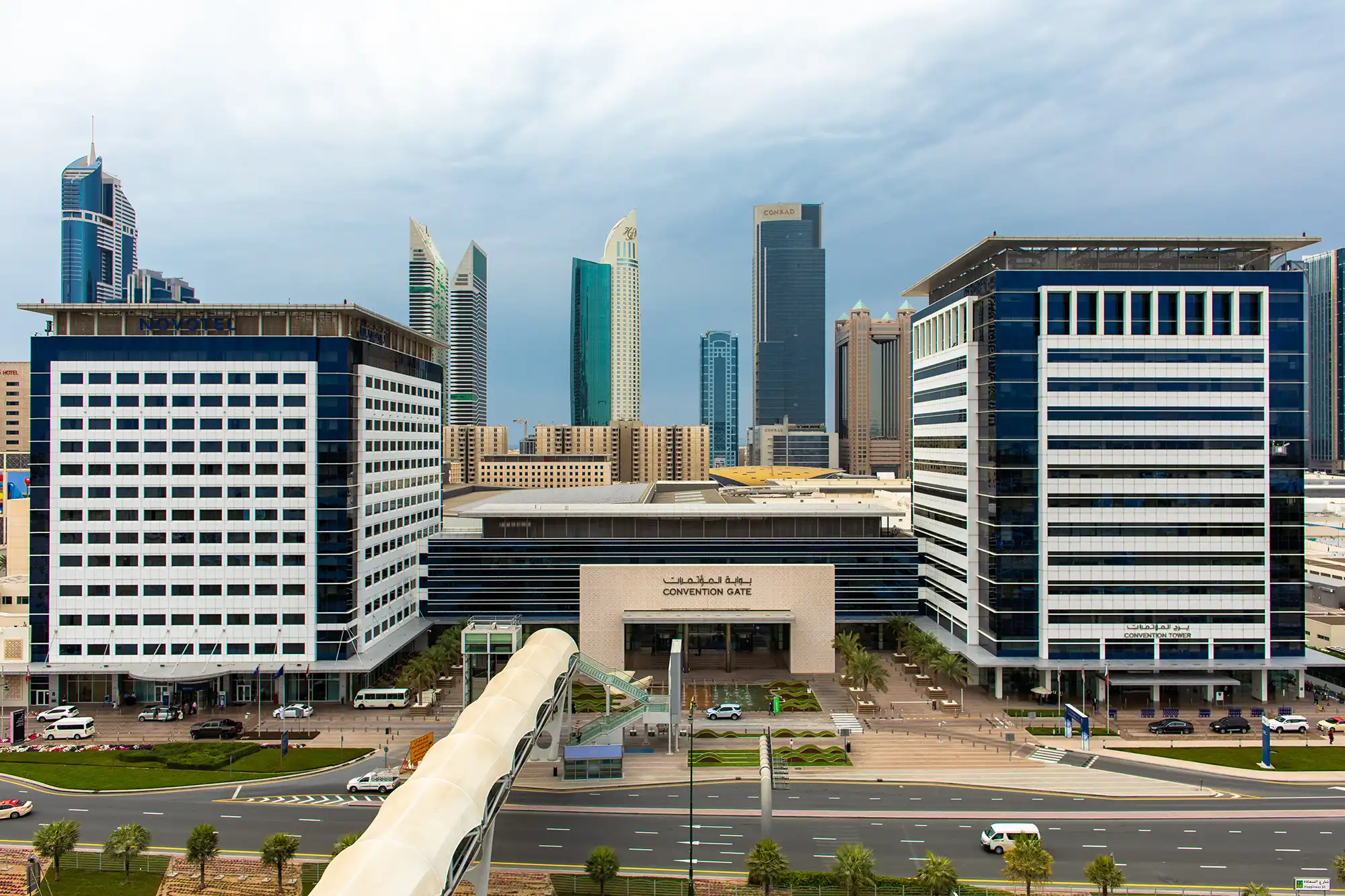
The tower was built on what were then the outskirts, about 4 km from Dubai Creek, and some doubted the success of the remote project. The only cause for optimism was the nearby highway to Abu Dhabi, which could bring life to DWTC.
And so it was: today Dubai extends all the way to Abu Dhabi, and the DWTC building is located in one of the busiest areas.
1999: Burj Al Arab, 321 meters
The heyday of the skyscraper era began in Dubai at the end of the 20th century. In 1999, the famous sail-shaped Burj Al Arab hotel was built on an artificial island next to Jumeirah Beach.
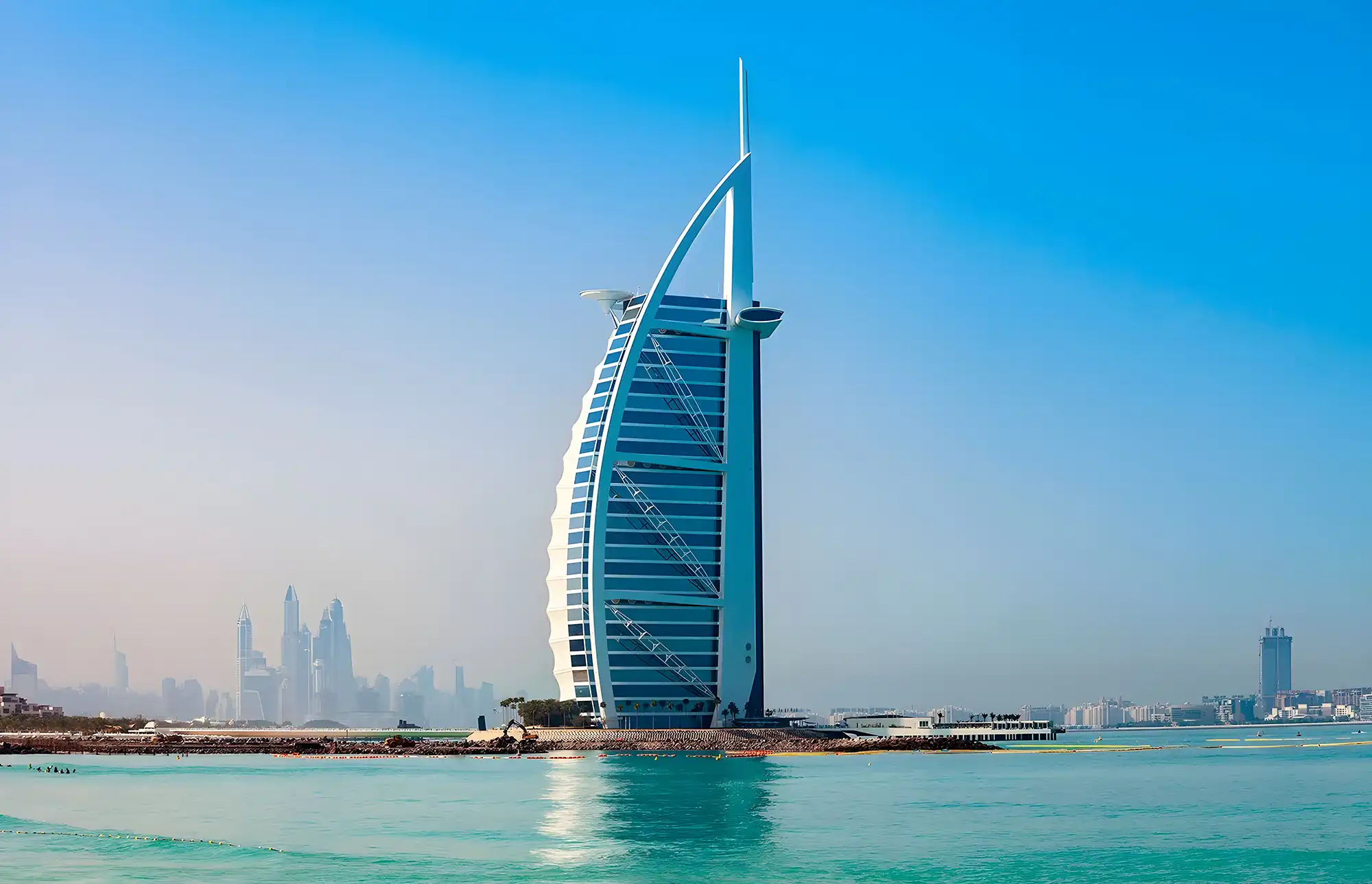
At that time Burj Al Arab was the tallest building in the city. However, the building turned out to be outstanding not only because of its height. About 1,790 square meters of 24-carat gold leaf, 21,000 Swarovski crystals and more than 24,000 square meters of snow-white Italian Statuario marble were used to decorate the luxurious interiors.
In April 2026, the hotel closed for an 18-month restoration, its first major renovation since opening; it is expected to welcome guests again in October 2027. Before the closure, a night here cost from about $1,000.
2000: Emirates Towers, 355/309 meters
Burj Al Arab did not hold the title of the tallest building in the city for long. Already in 2000, a complex of two towers was built near Sheikh Zayed highway, which surpassed the previous record holder.
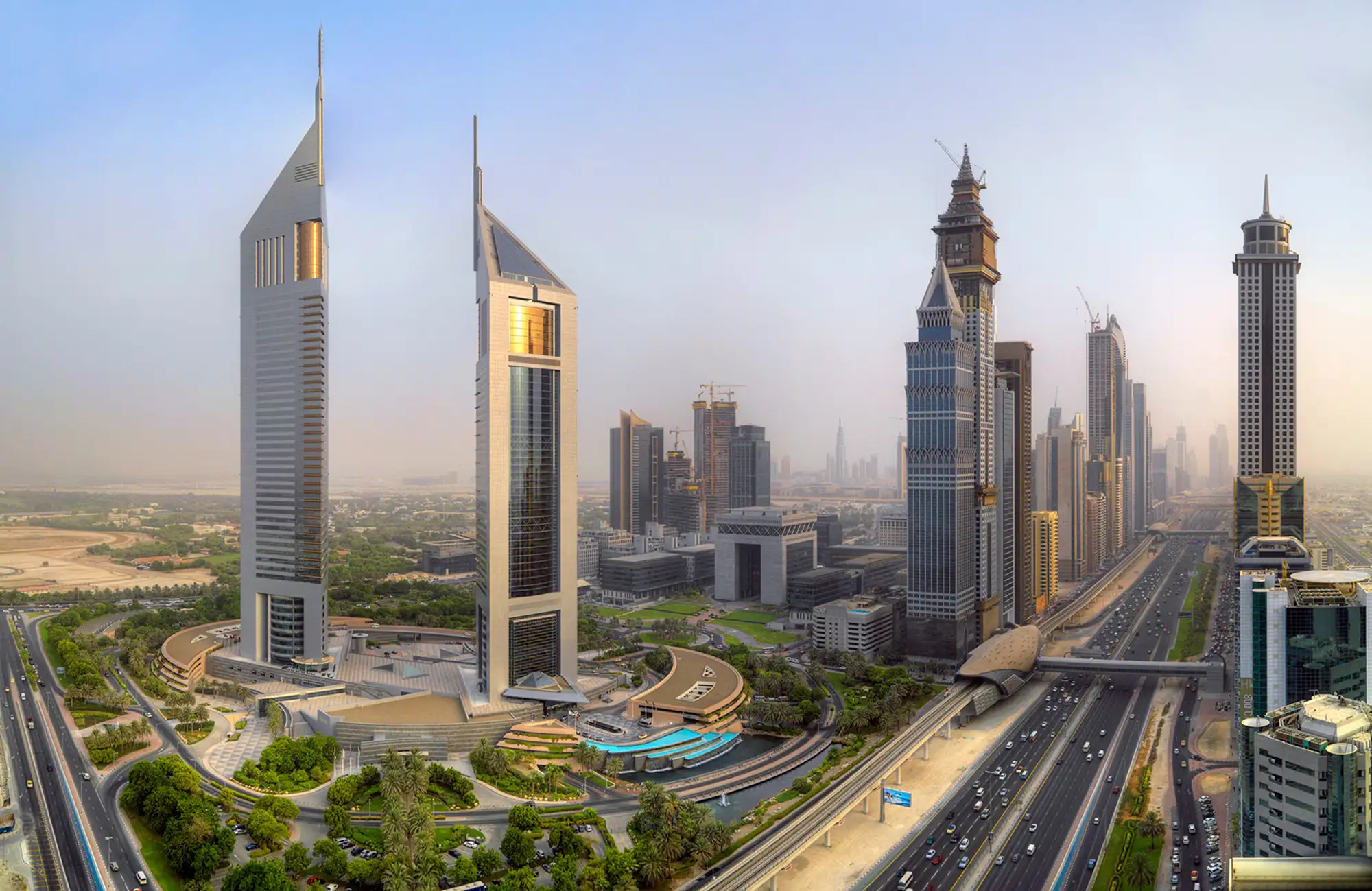
The project consists of a 54-storey office building Emirates Office Tower (355 meters) and 56-storey hotel Jumeirah Emirates Tower (309 meters). The skyscrapers are connected by a boulevard with stores of world-famous brands and a garden with cafes and fountains.
Although the towers are of different heights and storeys, from the ground they can appear almost identical. This is an optical illusion created by the angle of the facades and other architectural techniques.
2009: Almas Tower, 360 meters
The next record-breaker among Dubai high-rises was the 360-meter Almas Tower, built in the Jumeirah Lake Towers (JLT) complex.
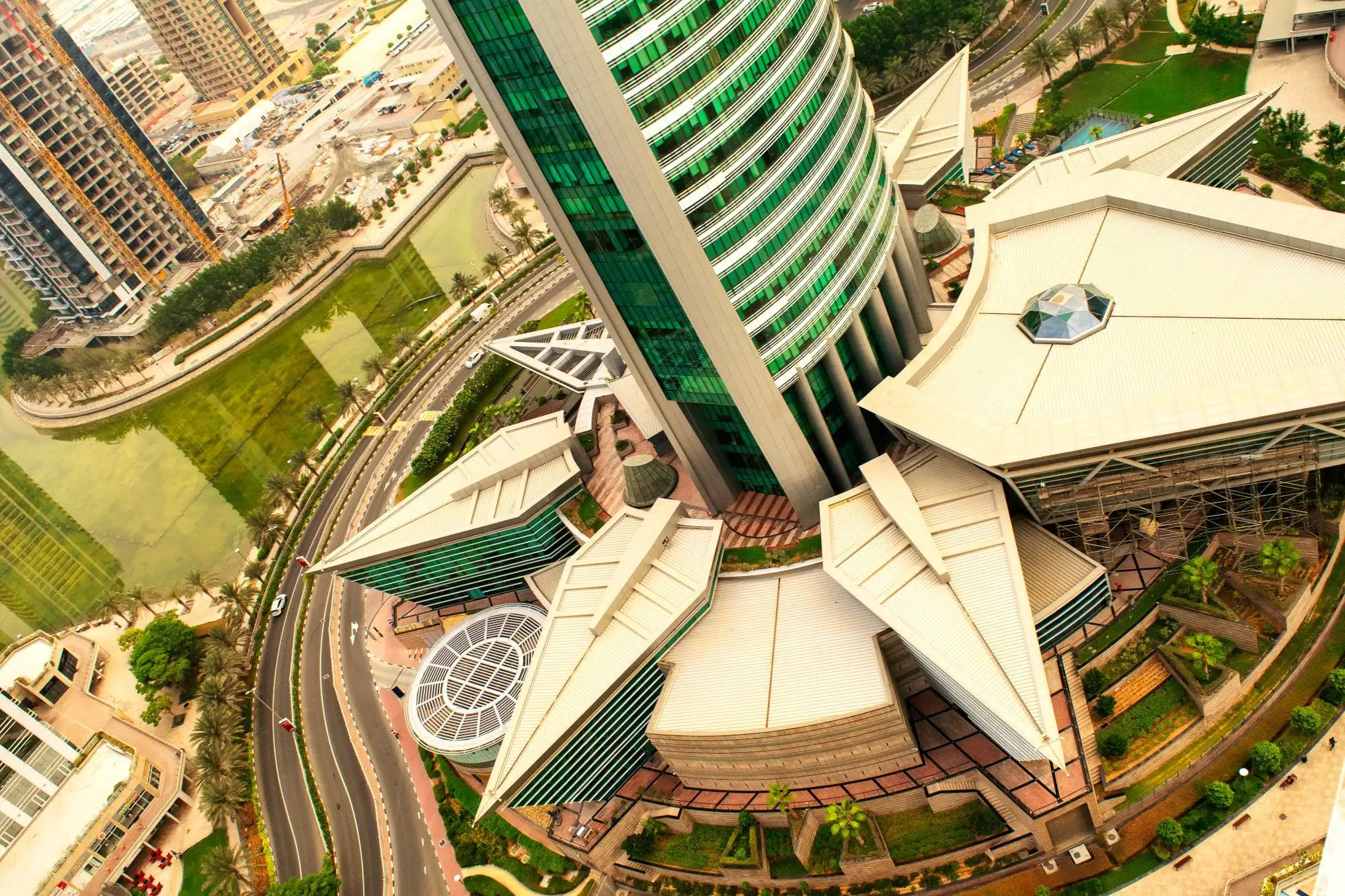
The skyscraper was designed specifically for the jewelry industry, so the architects were inspired by diamond cutting. The diamond and pearl exchanges moved into the tower, and it had to provide increased security measures (including strict access restrictions for visitors).
Almas Tower held the title of the tallest building in Dubai for less than a year. The skyscraper was opened in January 2009, but in October the construction of the famous Burj Khalifa was completed, and the “diamond” tower lost the title to it.
Burj Khalifa: A Record-Breaker Unmatched for 15 Years
The project of the famous Burj Khalifa was developed in the Chicago office of the architectural firm Skidmore, Owings & Merrill LLP together with the American architect Adrian Smith.
The base of the skyscraper at Downtown Dubai has the shape of three petals. The architects were inspired by the Hymenocallis flower. The main structure of the tower consists of three wings, which are arranged around a central hexagonal core.
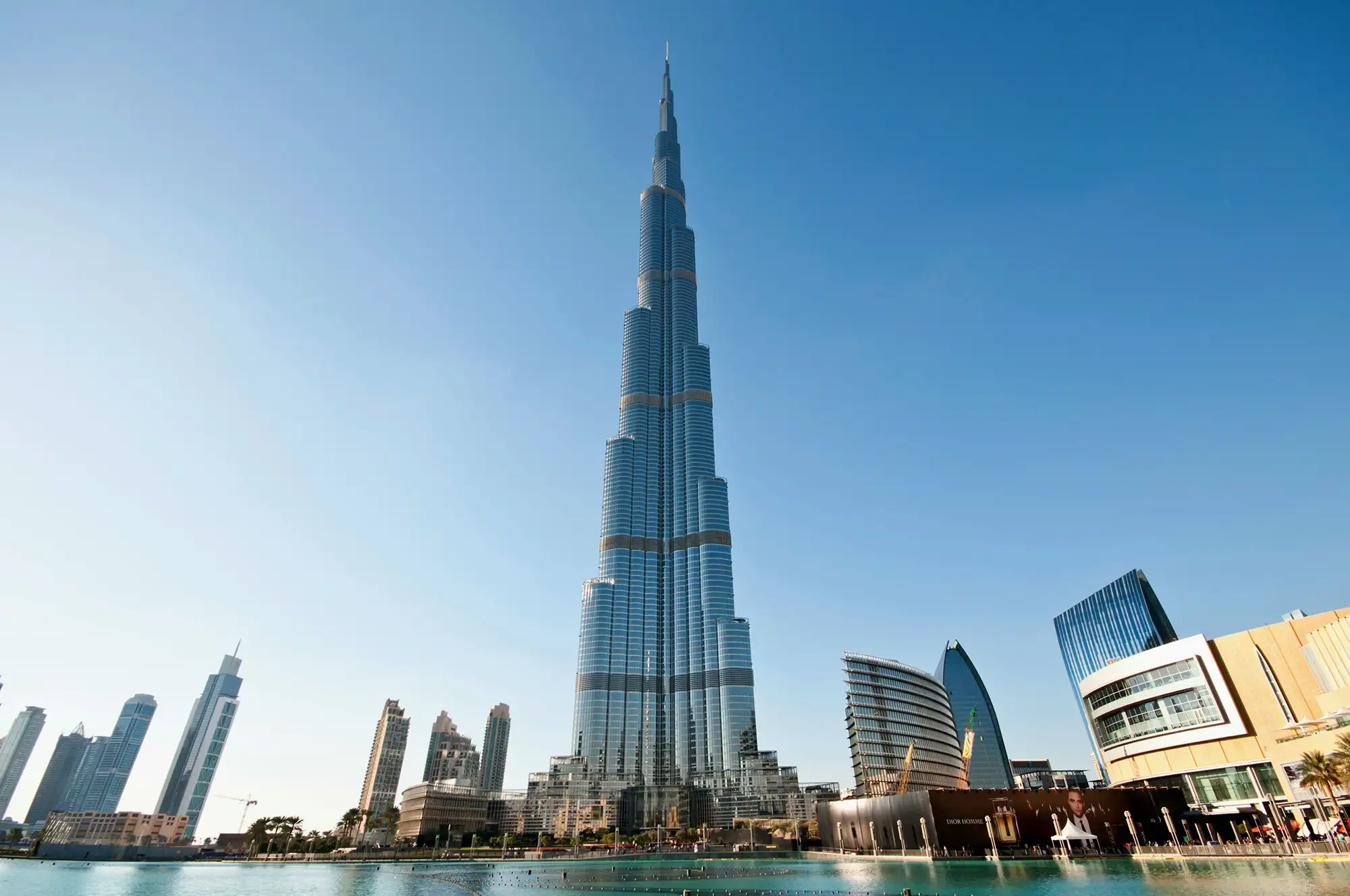
The tower was built by Emaar Properties. The work took 6 years to complete:
- 2004–2005: the site and foundations were prepared, due to the peculiarities of the sandy soil, a massive concrete foundation with deep piles had to be made for the tower
- 2005–2008: the main structure was erected, the construction utilized an innovative Y-shaped design with a stable frame, high-strength concrete and a steel spire
- 2007–2009: the exterior cladding of the building was done
The Burj Khalifa required 330,000 cubic meters of concrete, 39,000 tons of reinforced steel and 30,000 double-sided thermal panels to construct the cladding. The outer side of this material reflects ultraviolet rays, while the inner side reflects infrared rays. This solution halved the load on the cooling system. Wastewater is reused too: a Hitachi plant treats sewage from Burj Khalifa and downtown with membrane bioreactors and reverse osmosis to top up the Dubai Fountain lake. The water comes out clean enough to drink, so salt does not clog the nozzles and the spray is safe for spectators.
The grand opening of Burj Khalifa took place on January 4, 2010. More than 15 years have passed since then, but no other building in the world has surpassed the height record of 828 meters.

What Skyscrapers Are Joining Dubai’s Iconic Skyline?
Over the next few years, Dubai is set to welcome several new towers that aim to rank among the tallest in the world.
Corinthia Dubai, 500 meters
Global hotel group Corinthia is developing a branded 500-meter skyscraper near Sheikh Zayed Road, close to the Museum of the Future. The project will feature two towers connected by a dramatic cantilevered sky lobby over 200 meters above the ground.
The complex will also be home to the world’s highest swimming pool — offering views over the city and coastline from 500 meters up. The opening is scheduled for 2030.
Burj Azizi, 725 meters
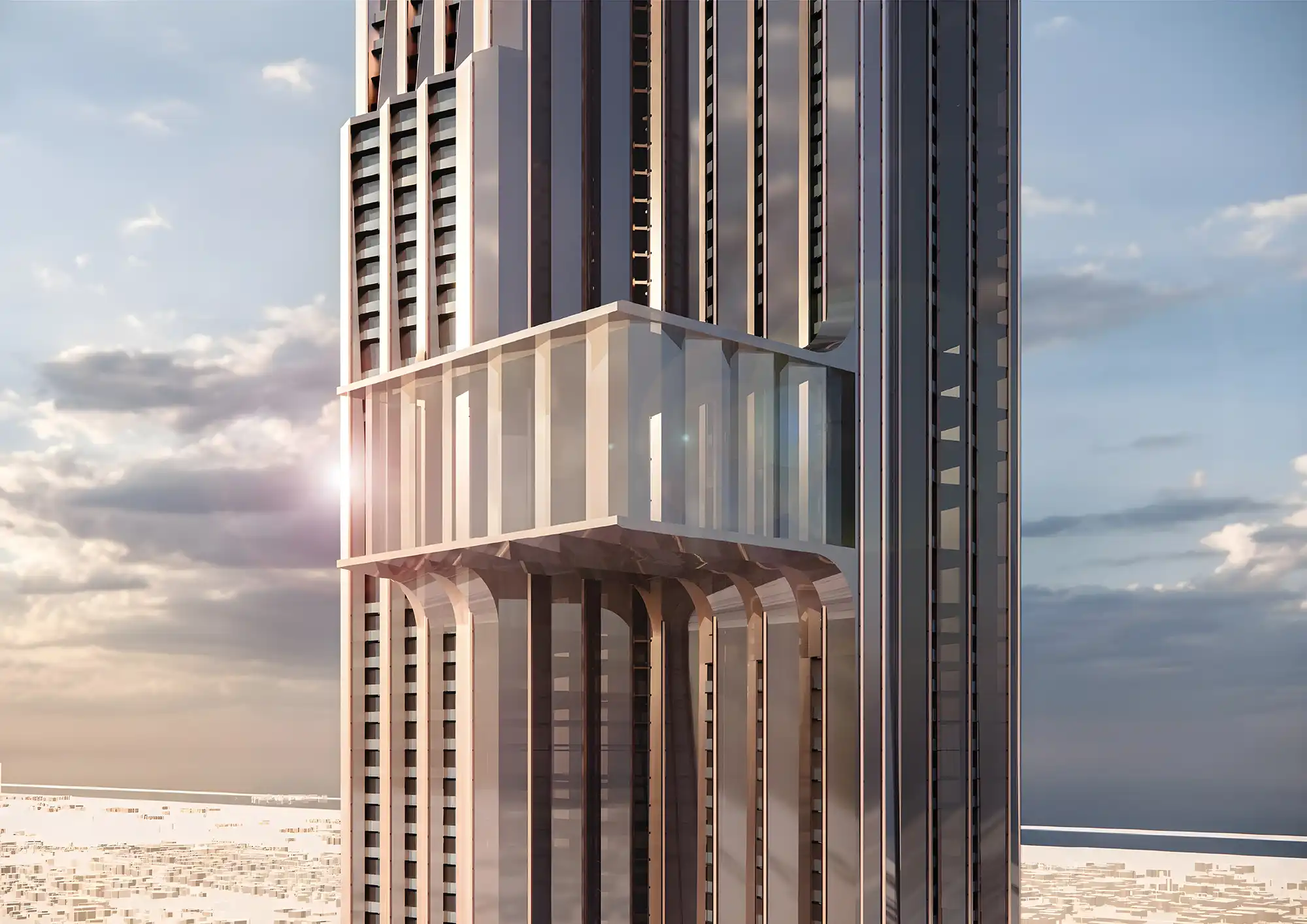
Currently under construction on Sheikh Zayed Road in the Trade Centre 1 area, Burj Azizi tower is set to become the second-tallest building in the world. The tower will include residential units, a seven-star hotel, and commercial facilities such as malls, restaurants, and a spa.
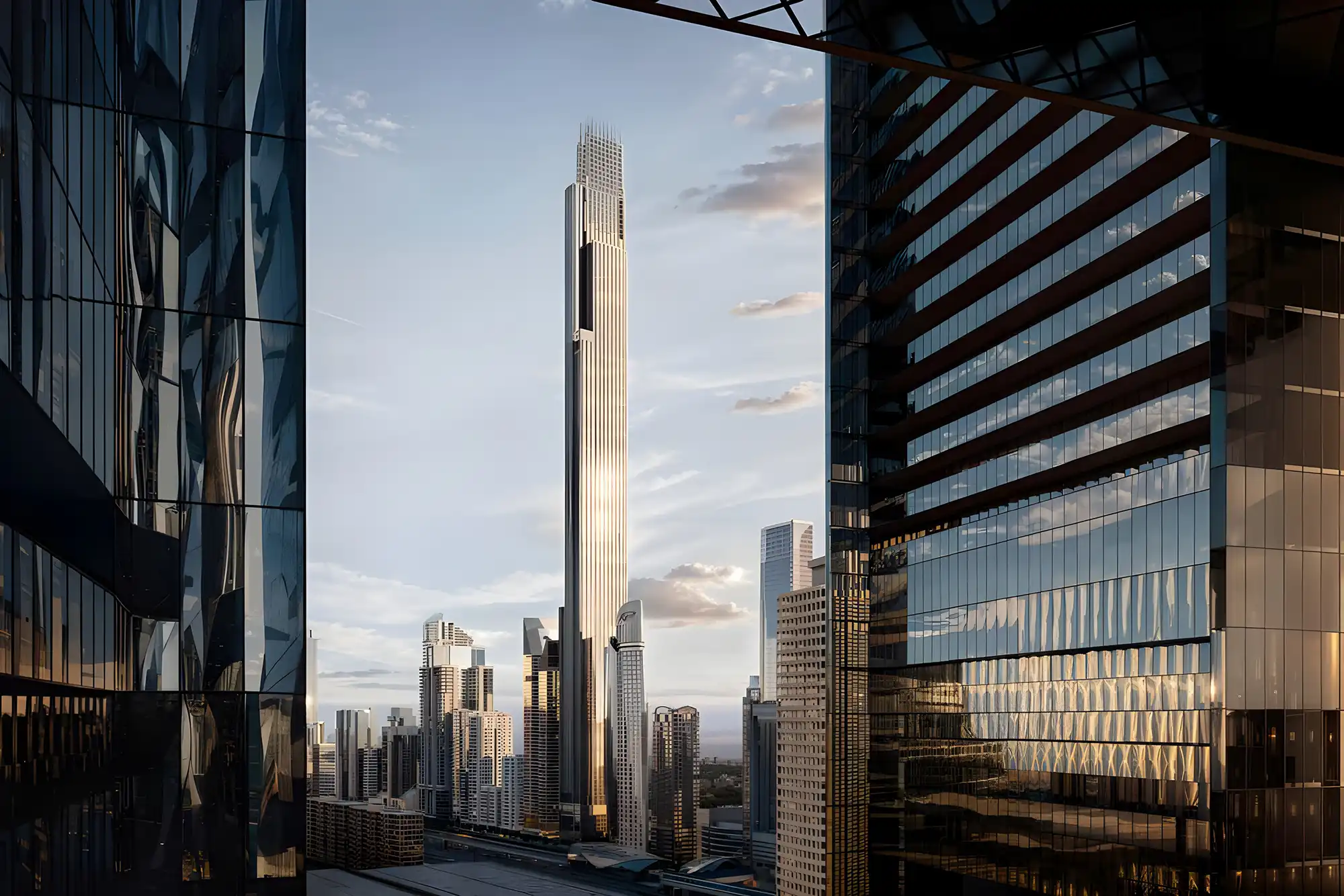
The developers aim to break multiple world records with features at record-setting heights:
- Observation deck — 649 meters
- Nightclub — 567 meters
- Restaurant — 544 meters
- Hotel suite — 512 meters
- Lobby — 498 meters
- Spa — 415 meters
- Supermarket and cinema — 310 meters
Burj Azizi is expected to be completed by 2030.
Dubai Creek Tower: Height Under Review
The Dubai Creek Tower project was launched in 2016. At that time, representatives of Emaar Properties said that the new tower was to surpass the Burj Khalifa. At first it was planned that the height would be 928 meters, later it was increased to 1,345 meters.
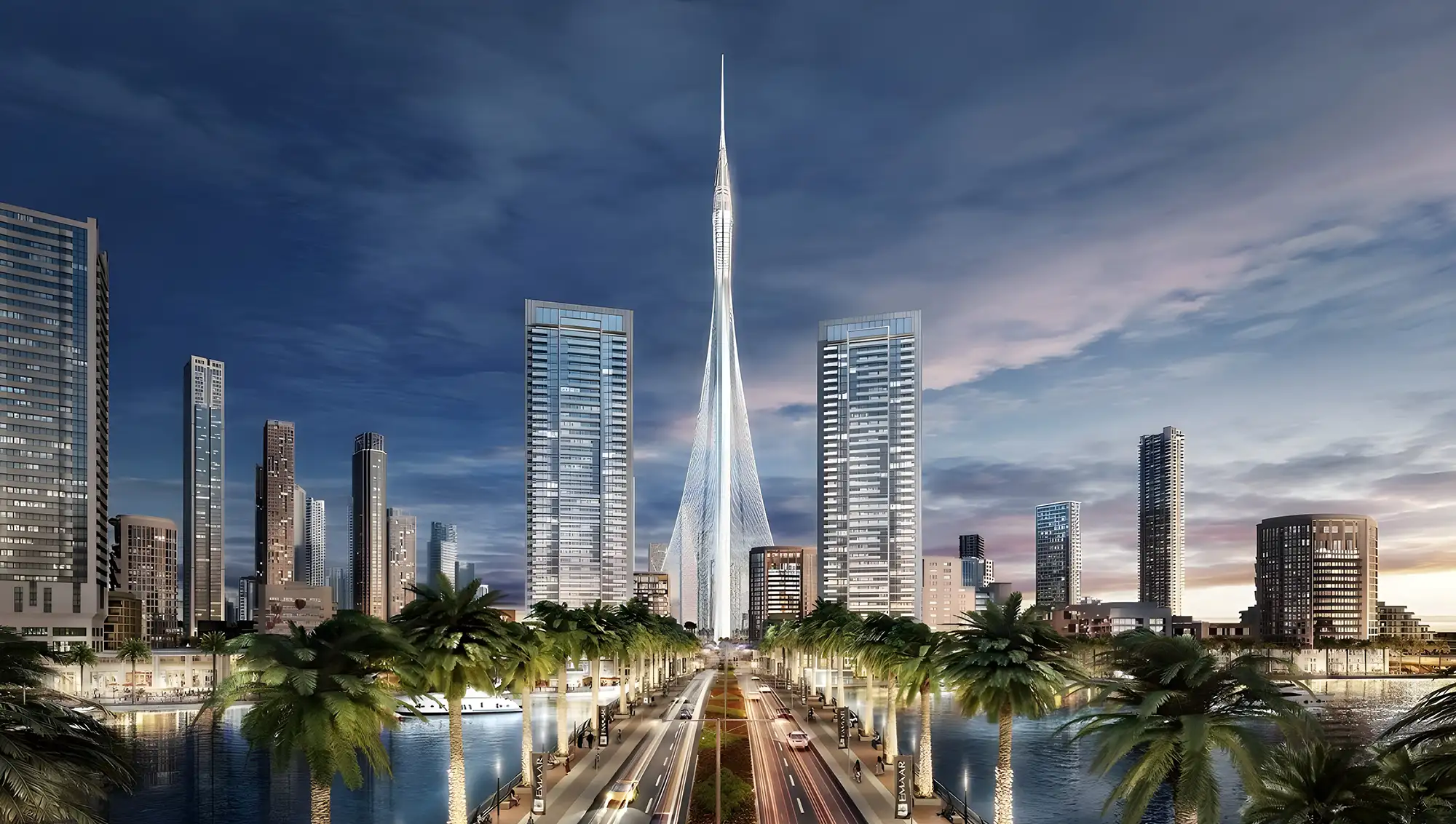
However, the plans could not be realized. In 2020, the pandemic began, and construction was suspended.
According to the developer's latest statements, the project is being redesigned and, once updated, is unlikely to claim the title of the tallest building in the world. The focus will be on elegance and functionality rather than height.

In the next few years, Dubai is already expecting new large-scale projects. The city is growing and developing, attracting more and more investors and tourists.
If you want to keep up to date with what is happening here, subscribe to Inside Realty on Telegram. And look for the most up-to-date project reviews on our YouTube channel.

Written by
Inside EditorialMarket reviews and news by the Inside Realty team · 14 articles