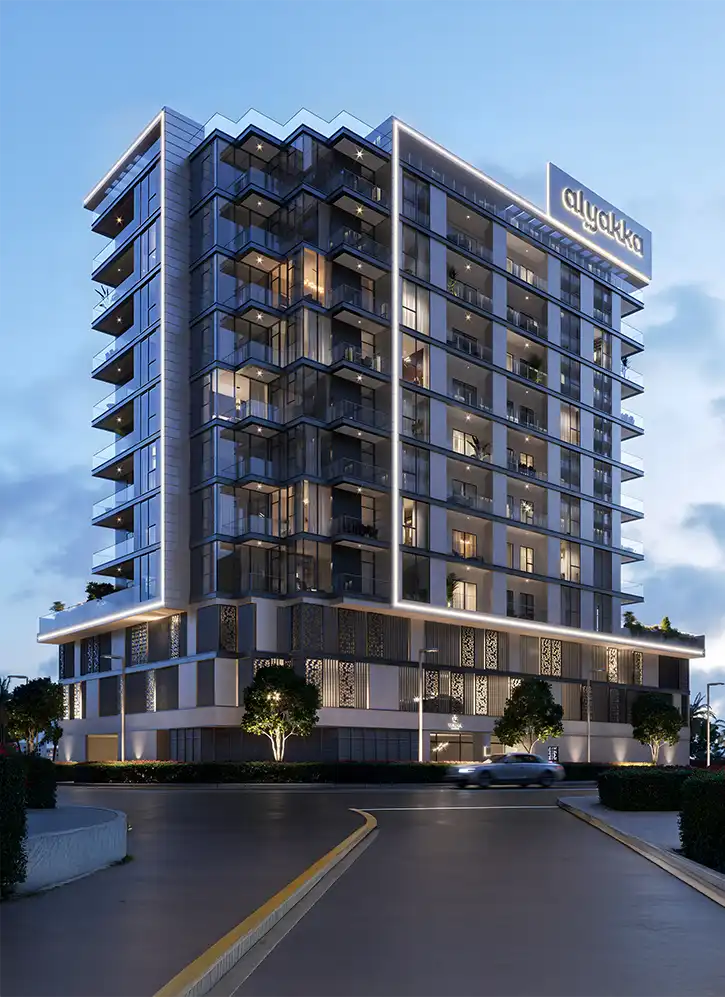
A persistent myth still circulates in real estate market: it’s easy to buy an apartment in Dubai, but nearly impossible to sell it later. This myth has given rise to a second one — that brokers are only willing to work with buyers, while sellers are left out in the cold. In reality, this is not the case.
The secondary market in the Emirates is vibrant and active, and in many ways, it best reflects what is actually happening in the market. The question is usually not whether a property can be sold at all, but why a specific property is not selling right now, in the current phase of the cycle, at the chosen price, and with the chosen strategy.
The Secondary Market: The Ultimate Test of An Asset’s Quality
In the UAE, as in any other country, there are two main segments: off-plan — new homes from developers during the construction phase — and the secondary market — properties under construction or already completed, sold by owners. For an agency that works not only with new construction but also with resale, the secondary market is not a secondary line of business but a key indicator.
It is this market that shows whether the market is growing or not, whether profits can be realized, and whether a property has real liquidity. Sales of projects exclusively from the developer, despite their appeal, do not provide the full picture. It is simpler and more profitable for many market participants, but not always objective.
If an agency works with investors, it is simply obligated to assess the secondary market in order to evaluate the prospects of new projects. It is not enough to simply select an attractive project at the start of sales. It is important to understand whether this property can be resold, how its value will evolve during the construction phase, what will happen by the time of completion, and how it will perform in the finished market.
That is why professional teams monitor completed projects, resales in projects under construction, and the launch of new phases. And if there is no certainty that the property can be resold at a profit, it simply shouldn’t be offered to an investor.
In short: the primary market is a showcase, while the secondary market is the real economy.
The Main Mistake Made by Real Estate Sellers in Dubai Is Having Unrealistic Expectations Regarding The Timing of The Sale
One of the key characteristics of the UAE market is that liquidity is not evenly distributed throughout the property’s lifecycle. This is particularly noticeable when an owner tries to sell an apartment during construction, before receiving the keys. This is where a great deal of disappointment arises: the investor expects a quick resale, but the market does not offer the desired price or, in some cases, does not generate sufficient demand at all.
The reason is that the bulk of liquidity emerges precisely at handover (when construction is completed, the developer hands over the keys, and the buyer is required to pay the remaining balance under the installment plan). If we look at price movements in a normal cycle from the start of sales to receiving the property, the first significant increase usually occurs at handover, that is, when the keys are handed over. The second phase of growth typically occurs about a year after receiving the keys.
Therefore, for a conservative investor who truly wants to “skim the cream,” the logic often looks like this: wait until the property is received, make the final payment — whether through an installment plan or a mortgage — hold onto the asset for a while longer, and only then put it up for sale at the highest possible price.
This is precisely where the expectations of those who want to sell halfway through construction — and still get nearly the same return as on a completed property — are dashed. At this stage, the market operates differently.
This is due to two factors:
- The property becomes “tangible” — construction risk disappears
- The pool of potential buyers expands (including those with mortgages)

Attempting to sell a property before completion essentially means exiting at a less liquid point in the cycle.
In a growing market, offers described as “nearly finished distressed property,” “below market value,” “at the original price,” or even cheaper look particularly tempting. But it is precisely in such situations that the greatest degree of caution is required. There are certainly exceptions, but such an offer should not be cause for celebration, but rather a cause for concern.
If a property is nearing completion yet has shown no growth, or if an apartment is being sold at a significant discount at a time when the market as a whole is growing and transactions are taking place, then there is a reason for this. It may not be obvious, but it must be investigated. The market rarely gives gifts for no reason.
Therefore, the question here is always the same: why hasn’t this property appreciated by the time of handover, when the surrounding market has been growing? Professional work begins with this kind of analysis, not with excitement over a low price.
During The Construction Phase, You’re Competing Not with Investors, but With The Developer
The primary reason why an apartment in Dubai doesn’t sell during construction is direct competition with the primary market. While the owner tries to resell the apartment through an assignment, developers continue to launch new phases, new buildings, and new stages. And very often, they enter the market with a stronger package: a fresher concept, a more impressive presentation, more communal spaces, and more aggressive marketing.
But something else is more important. The developer pays the market much more for sales. While a standard commission in the secondary market may be around 2%, in projects from the developer, brokers often receive 5%, 6%, and sometimes even 7%. And this, of course, influences market behavior. In most cases, a broker — especially when there is no in-depth analytical work with the investor — will steer the buyer toward where it is easier to sell and where the commission is higher.
Therefore, it is important for an owner selling through an assignment to understand: they are not selling in a vacuum. They are selling at a time when a developer is right next door with new phases, powerful marketing, and a much stronger incentive for the brokerage channel.
Even A Low Price on The Secondary Market Doesn’t Always Beat A Developer
At first glance, it might seem that if a resale apartment is cheaper than a new development from a builder, the buyer will automatically choose it. But in practice, the market makes decisions based not only on price per square meter, but also on the terms of the transaction.
When a buyer purchases a property on the secondary market — even if it is still under construction — they often need to pay a substantial portion of the cost upfront — around 30–40%, and sometimes even 50% of the property’s price — in order for the developer to even grant permission for the resale. This is a mechanism developers use to protect new projects from pressure from early investors.
At the same time, buying directly from the developer may require a much smaller down payment. There are projects where a 5% down payment is sufficient, with an additional 4% going toward state taxes. In other words, the buyer needs only about 8–9% in liquid funds to get into a new development. Against this backdrop, even a resale apartment — which seems 20–30% cheaper can lose out simply because it requires a much larger upfront payment.
The Secondary Market Is More Complex — Not Only in Terms of Price, but Also in Transaction Mechanics
Another reason that is often underestimated is the operational complexity of the secondary market. Dubai and the UAE as a whole attract investors from all over the world. Many of them do not have local bank accounts, are unfamiliar with local transaction procedures, and are often encountering a tool such as a manager’s check for the first time. For someone from another jurisdiction, the very structure of payment in the secondary market may seem unfamiliar and complicated.
In such transactions, it is not enough to simply “show the property”; one must effectively guide the buyer through the entire process: explain the mechanics, engage a conveyancing firm, arrange legal support, and monitor the steps taken by both parties. If the buyer and seller are not physically present in the Emirates, the task becomes even more complicated.
At the same time, it’s important to understand that many myths surrounding the banking infrastructure in the UAE are also exaggerated. For example, there’s a widespread belief that you can’t open an account without residency. This isn’t true: it is possible to open an account without residency, although it is indeed more complicated and often more expensive. But it is possible. You just need to conduct such a transaction transparently, competently, and within the law, and you should have a broker on hand who knows how to guide you through these processes step by step.
Given all the complexities of the secondary market, developers offer buyers a much clearer and more straightforward path. Funds can be transferred directly from anywhere in the world via SWIFT. Some developers officially accept cryptocurrency. Others also accept cash. For international buyers, this process appears simpler, faster, and more familiar when it comes to making a decision.
However, the cash option does not automatically mean a better deal. On the contrary, projects where the developer accepts cash are often sold at a 10–15% premium, and that is by no means an exaggeration. This price difference often effectively covers the subsequent legalization of the funds within the system: transfer to an escrow account, processing via a manager’s check, and so on. In other words, if a developer actively emphasizes the option to pay in cash, this is not necessarily a bonus for the buyer, but sometimes simply an indicator that they are already overpaying for the most convenient payment method.
Mortgages Significantly Expand The Pool of Buyers, but Only After Completion
Another key factor is mortgage availability. It is much more difficult to secure a mortgage for an off-plan property in the UAE. There are a few government-backed developers and literally just a handful of banks willing to handle such cases, but the terms are strict: a high down payment, restrictions on property types, and restrictions on the buyer’s status.
If the buyer is a non-resident, getting a mortgage for a property under construction is even harder. Residents generally have access to more favorable terms — a lower down payment and more reasonable interest rates. But during the construction phase, the pool of potential mortgage borrowers is still significantly smaller.
After the building is completed, the situation changes. As soon as the property is handed over, mortgages become available to a much wider range of buyers. And it is precisely at this moment that a significant surge of demand enters your pipeline. Yes, the UAE market is not saturated with credit, and mortgage transactions here are relatively few — about 30% of the market. But it is precisely these 30–35% of buyers who begin to play a role once the property is ready. And this is one of the reasons why waiting for the keys so often turns out to be the right strategy for the seller.
Why Working with All Agencies at Once Doesn’t Help
In the secondary market, property owners often have an intuitive but mistaken belief: the more agencies they list their property with, the higher the chance of a sale. The logic seems straightforward — more intermediaries means greater reach. But in reality, it doesn’t work that way.
All the main methods of marketing a property are well known. When a property is scattered across multiple agencies at the same time, it doesn’t mean the entire market is working on it. More often, it means the opposite: no one is truly invested in the outcome. There is no personal accountability, no investment of resources, and no motivation to develop a strategy, address objections, negotiate, or hold the price.
Overpricing and Underpricing Both Hinder A Sale
Another critical factor is incorrect pricing. The mistake can be either overpricing or underpricing. On an emotional level, the owner may feel that it’s enough to simply “set a good price” or, conversely, “offer a discount — and it’ll sell right away.” But in practice, the market requires comparative analysis, not intuition.
The advantage of the UAE is that there are platforms here showing actual sales and rental transactions for virtually all projects. This data is updated daily, which is why it is objectively easier to determine whether a property is market-priced than in many other countries. There is no universal magic answer here. There is only a specific property, a specific market stage, and a specific listing date. The market price is determined not by the owner’s gut feeling, but by what is happening with similar properties and actual closed deals right now.
That is why a good seller starts not with the question “how much do I want,” but with the question “at what price can this property actually be sold today or by the time of handover.”
What Actually Works When Selling An Apartment in Dubai
There are plenty of buyers in the UAE’s secondary market, and that’s crucial. The problem usually isn’t a lack of demand per se, but rather that the seller enters the market at the wrong time, with the wrong strategy, and at a price that doesn’t match the current market conditions.
In short, the basic logic of a successful sale is quite clear. It is precisely these three conditions that most often make a sale quick and profitable:
Sometimes The Right Decision Is to Exit An Investment and Reallocate Capital
There’s another important point that the market often doesn’t like to voice aloud: not every investment is worth holding onto until the very end. If you realize that an asset isn’t growing, if it isn’t showing the desired momentum, if something is wrong with it from the market’s perspective — waiting for a miracle isn’t always rational.
In a growing market, a normal investor strategy is not only to buy, but also to sell at the right time, and then shift funds into a new asset that can generate higher returns. This is not a mistake or an admission of defeat. It is sound investment logic. It is far worse to get stuck in the illusion that one day the market will fix everything on its own, without any objective reasons for such a turnaround.
Conclusion: How to Sell An Apartment in Dubai?
The myth that it’s impossible to sell an apartment in the Emirates doesn’t hold up to reality. The secondary market in the UAE is active, transactions are taking place, and there are plenty of buyers. But selling here requires an understanding of the specifics.
You need to keep in mind that liquidity often emerges closer to handover, that during the construction phase you’re competing with the developer under inherently unequal conditions, and that for the buyer, it’s not just the price that matters, but also the entry threshold, mortgage availability, and the simplicity of the transaction itself.
Therefore, the question usually isn’t, “Can you sell an apartment in the Emirates?” but rather, “Have you chosen the right timing, strategy, and price for selling this specific property?” And it is precisely in the answer to this question that the reason is most often found for why some properties sell quickly, while others sit on the market for months without a sale.
You can sell real estate in the United Arab Emirates with Inside Realty — just submit a request.



 23/03/2026














 Sobha Siniya Island
 UAE GOLDEN VISA