
Key takeaways
- In 2025, Abu Dhabi had the lowest score in the world on the Numbeo crime index: 11.2, against 21.6 in Bern and 22.6 in Singapore.
- Prices of premium apartments on Yas and Saadiyat rose by around 17% in the first months after Disney announced its Abu Dhabi park in May 2025.
- Around 32,000–39,000 new residential units are forecast by 2028, and seven developers control 77% of future supply, so oversupply is unlikely.
- Class A office vacancy is 0.1%; Radiant offices start from $408,000, with an expected rental yield of 11.9%, a forecast without a guarantee.
- Property worth at least AED 2 million can lead to UAE residency under the rules as of 2026; check the conditions on the date of the transaction.
Abu Dhabi now offers investors many of the opportunities Dubai offered a few years ago. This article explains what keeps global capital coming to Abu Dhabi during regional instability and where investors can find opportunities today.
We live and work in the UAE and study its property market.
Why we recommend Abu Dhabi for living, resale and rental income
We recommend considering property in Abu Dhabi for living, resale and rental income for three reasons:
- A strong geographic location
- A market that is still forming, so prices are relatively low
- Large government investment in infrastructure, tourism and technology
The property market has slowed amid tensions in the Middle East. This is a normal reaction to geopolitical uncertainty, and Abu Dhabi’s fundamental advantages have not changed.
If the conflict drags on, Abu Dhabi’s stability and its role as a financial center will make it an anchor for investors and residents of the region. If the situation settles quickly, global investors will return and the market will keep growing.
Below are Abu Dhabi’s fundamental strengths, to help you decide whether now is the right time to invest.

What makes Abu Dhabi attractive to property investors
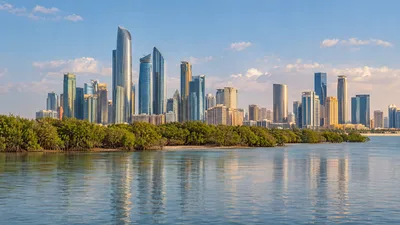
Abu Dhabi is the largest of the seven emirates by area and GDP, the capital of the UAE and the wealthiest emirate. Here is what its main advantages mean for property investors.
Wealth
Abu Dhabi ranks among the world’s top cities by GDP per capita. Historically the money came from oil; today it increasingly comes from technology, finance, industry, tourism and logistics.
For the property market, this means the emirate can afford new roads, island development, cultural clusters and education hubs.
Strategic location
Around 80% of the world’s population lives within an 8-hour flight of Abu Dhabi. This makes the city convenient for international business, corporate headquarters and relocation.
Demand for housing comes not only from neighboring cities and countries but also from people relocating from across the globe.
Safety
Abu Dhabi has a very low crime rate: in 2025, it had the lowest score in the world on the Numbeo crime index.
- 11.2Abu Dhabi’s score on the Numbeo crime index, the lowest in the world2025 · Numbeo
| Abu DhabiUAE | 11.2 |
|---|---|
| BernSwitzerland | 21.6 |
| Singapore | 22.6 |
| AlicanteSpain | 30.8 |
Numbeo
Safety strengthens the country’s reputation and matters to tourists and future residents alike. A safe city attracts people who move for the long term: families, entrepreneurs and senior executives. With them, demand for quality housing grows.
Infrastructure
Abu Dhabi is comfortable both for living and for managing capital: it has advanced healthcare, transport, ports, air connections and international schools.
A market at an early stage
Abu Dhabi is already a strong global hub, while its property market is not overheated.
This gives investors a chance to enter early and potentially earn more than those who come later. Our experts compare today’s Abu Dhabi market with Dubai 10 years ago.
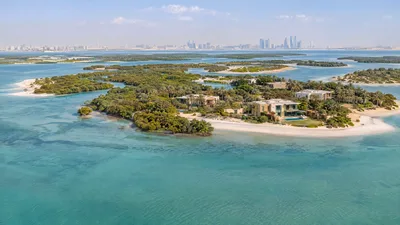
Abu Dhabi is an emirate of 200+ islands, each with its own theme
Abu Dhabi is unlike other world capitals: the emirate is made up of 200+ islands. Some are already developed, others are only beginning to be built.
Each island has its own theme, and districts are built under a unified master plan, so it is clear from the start what will be built and what infrastructure will follow. As a result, the city reads as one planned urban cluster.
districts are built under a unified master plan, so it is clear from the start what will be built and what infrastructure will follow
The main islands: entertainment, culture, sport and business
Here is a short overview of four of the main islands.
Yas Island: entertainment and tourism
Abu Dhabi’s main attractions are here: Ferrari World, Yas Waterworld, Warner Bros. World, the Formula 1 circuit, major concert venues and resorts. The island has become one of the most recognizable destinations in the UAE.
The first Disneyland in the Middle East is expected to be built here in about 5–7 years, which should bring even more tourists. More on Disneyland below.
Saadiyat Island: the cultural center of the emirate
The island’s cultural district of five museums is nearly complete: the Louvre, the Natural History Museum, the Zayed National Museum and teamLab Phenomena are open, and the Guggenheim is scheduled to open on 11 December 2026. Seafront residences are being built here too, with views of the Louvre and the Zayed National Museum.
Hudayriyat Island: sport and an active lifestyle
The island is designed for an active lifestyle, with 321 types of activities planned, as well as beaches, yachts and villas with sunset views.
Al Reem Island: the business hub of the emirate
The island is Abu Dhabi’s business center. It is often compared with Dubai’s DIFC district, but prices here are much lower because the area is still under active development.
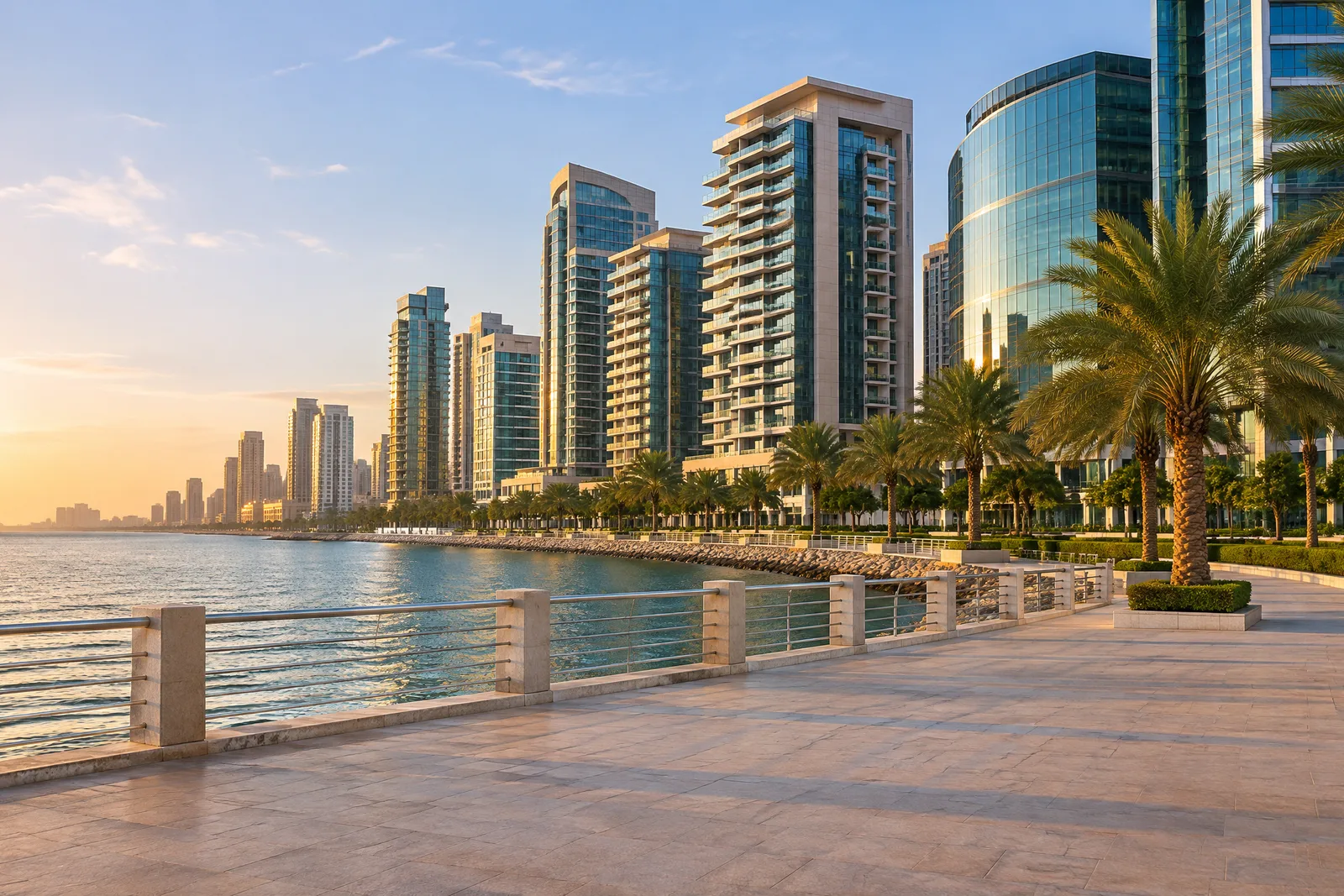
Megaprojects that will change Abu Dhabi by 2035
These are the key events and megaprojects that will shape Abu Dhabi in the coming years.
Disneyland Abu Dhabi on Yas Island
In May 2025, Disney announced the first Disneyland theme park in the Middle East, to be built on Yas Island. Disney has not named an opening date; estimates based on its timeline point to 2030–2033.
This will be the most technologically advanced Disneyland in the world, and its effect on the market is already visible: in the first months after the announcement, prices of premium apartments on Yas and Saadiyat Islands rose by around 17%. We expect tourism and housing demand in these locations to grow.
In this video, we explain what will happen to housing prices and how Disneyland will change the emirate:

Completion of the cultural district on Saadiyat Island
The museum cluster on Saadiyat has grown quickly in recent years. The Abu Dhabi Natural History Museum and the Zayed National Museum opened in 2025, joining the Louvre and teamLab Phenomena. The fifth museum, the Guggenheim Abu Dhabi, is scheduled to open on 11 December 2026.
We have already visited teamLab Phenomena. Watch how it went:

Launch of the Etihad Rail network
Etihad Rail is one of the largest transport upgrades in the UAE: a railway of about 900 km that connects all seven emirates and cuts travel time between them. Passenger services started on 30 June 2026 on the Fujairah to Abu Dhabi route, and trains between Abu Dhabi and Dubai have run since 30 September 2026.
Betterhomes analysts expect property prices near the new railway stations to rise by 10–15% and rents by up to 30%.
Development of Hudayriyat Island
Hudayriyat is one of the largest coastal projects in Abu Dhabi, built for waterfront living.
It already has the world’s longest cycling track and white-sand beaches, and residential clusters, schools, a marina and thousands of villas are on the way. Once complete, the island will offer 321 types of sports activities.
Watch our detailed review of the island:

Expansion of Abu Dhabi International Airport
Abu Dhabi International Airport is being expanded. The capacity of Terminal A, opened in 2023, is planned to grow from up to 45 million passengers today to 65 million.
The airport is also introducing biometric facial recognition, process automation and AI systems that manage passenger flow and reduce queues.
Microsoft and Stargate: global tech companies are choosing Abu Dhabi
Abu Dhabi is betting on technology and artificial intelligence and is gradually becoming one of the world’s leading tech hubs. The government attracts major companies, invests in infrastructure and creates conditions for new industries.
Microsoft has invested $1.5 billion in G42, Abu Dhabi’s sovereign AI company. In total, the corporation plans to invest more than $15 billion in the UAE economy by 2029, in data centers, cloud infrastructure and AI talent.
One of the world’s largest AI clusters, Stargate, is also being built in the capital, with OpenAI, Nvidia, Oracle, G42, Cisco and Japan’s SoftBank taking part. It will combine data centers, AI laboratories, engineering campuses, offices of technology companies and residential districts around them.
Stargate covers nearly 26 sq km, 13 times the size of Downtown Dubai. The project will create thousands of jobs, and the new specialists will need housing.
How property prices in Abu Dhabi have moved
Abu Dhabi opened its property market to foreign investors much later than Dubai: a law allowing foreigners to fully own property was adopted only in 2019. That is why we believe most of Abu Dhabi’s growth is still ahead.
Over the past year, property prices in the emirate have risen:
| Apartments | 14% |
|---|---|
| Villas | 11% |
After a relatively stable period, the market began to accelerate in 2023, when both sale prices and rents rose by 14%. This points to growing demand for housing in Abu Dhabi.
After a decline in 2020, the market recovered gradually: from mid-2024 to mid-2025, villa prices rose by 11% and rents by around 5%.
New housing supply in Abu Dhabi remains limited
Supply is a key driver of prices. When little new housing is delivered while demand grows, prices rise faster.
This is the situation in Abu Dhabi today: the market is developing and investor interest is growing, but the volume of new construction remains limited.
Around 32,000–39,000 new residential units are forecast to be built in the emirate by 2028. For comparison, about 210,000 apartments are expected to be delivered in Dubai in 2025–2026. Supply in Abu Dhabi is being released more cautiously, so the market is unlikely to become oversupplied.
Supply in Abu Dhabi is being released more cautiously, so the market is unlikely to become oversupplied.
Seven developers control 77% of future supply in Abu Dhabi:
- Aldar: the main developer of Abu Dhabi
- Modon: an international developer headquartered in Abu Dhabi
- Bloom: a developer also active in Spain and Egypt
- Radiant Real Estate: a developer of residential and commercial property whose projects sell out quickly
- Reportage Properties: a company with 20 years of experience and one of the largest private developers in the UAE
- LEAD: a developer that has delivered 6,000 apartments and over 2 million sq m
- Eagle Hills: an Abu Dhabi-based private developer founded by Mohamed Alabbar, the founder of Emaar
Projects are launched by large, financially stable companies, and development follows a strategic plan, so the market grows in a controlled way.

Buying property in Abu Dhabi can lead to UAE residency
Property in the UAE can bring not only capital growth but also a residency visa, which lets you live, work, study, open a bank account or start a business in the country.
Main requirements for a residency visa through property:
- Own property worth at least AED 2 million (≈ $550,000). For off-plan property, at least AED 2 million must already be paid to an approved developer; with a mortgage, your own equity must be at least AED 2 million
- Be physically present in the UAE at the time of application
- Have proof of ownership: a purchase agreement with an approved developer for off-plan property, or a registered purchase agreement or Title Deed for completed property
- Obtain a Statement of Account (SOA) from the developer or, if you bought with a mortgage, a property value certificate and a certificate that the property is not under seizure
These are the rules as of 2026. Conditions change, so check them on the date of the transaction.
Where the main opportunities for investors are today
Abu Dhabi’s property market is developing in two directions: residential and commercial property.
Residential property in Abu Dhabi
Over the past year, average housing prices in Abu Dhabi have risen by 14%. The main driver is the inflow of skilled professionals and international companies: more and more people are moving to the capital to live, work and do business.
Supply remains limited: there are noticeably fewer new projects in Abu Dhabi than in Dubai.
One notable project is Radiant Garden on Al Reem Island, home to the ADGM international financial center, which is often compared with Dubai’s DIFC. Apartment prices here start from $177,000.
For a financial center in the capital, these prices are low: in Dubai, they are hard to find even in more affordable residential areas such as Jumeirah Village Circle (JVC).

Commercial property in Abu Dhabi
Abu Dhabi, like Dubai, has a strong shortage of office space. Class A vacancy is almost zero, at 0.1%, while companies keep moving to the emirate. High demand and limited supply push office prices and rents up.
We recommend an office project by developer Radiant. Prices start from $408,000, with an interest-free 55/45 payment plan.
Expected rental yield is 11.9%. This is a forecast, not a guarantee.
Five Abu Dhabi projects we recommend to investors
Five projects are coming to the market that we recommend to our investors:
Manchester City Yas Residences by Ohana
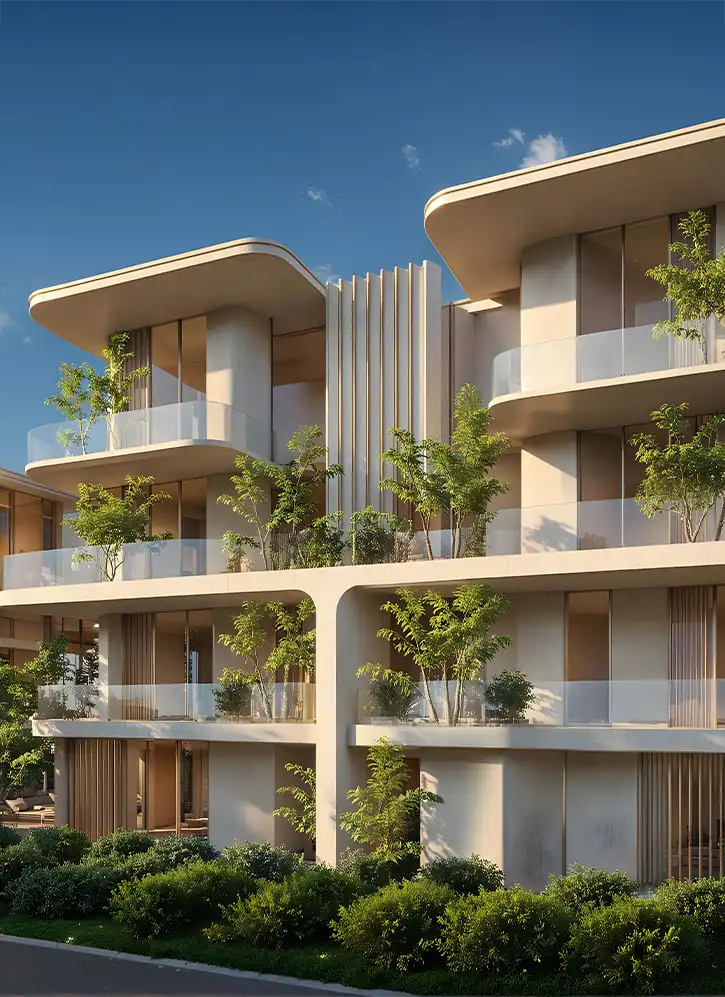 Project in this article · Yas IslandManchester City Yas Residences by OhanaPrice from AED 1,700,000 · OhanaView project
- Price from $462,900
- Developer: Ohana
- Location: Yas Island
A Manchester City branded project with villas, townhouses and apartments, suited to both end users and investors. It is built for capital growth: by our estimate, the investment could potentially double in four years, though this is not guaranteed.
Sobha Saadiyat Island
Price from $544,600. Developer: Sobha Realty.
A community of 11 residential buildings of up to 11 floors, villas and townhouses, with golf courses and several international schools. The residences look directly onto Yas Island.
Modon Muheira Phase B
- Price from $435,700
- Developer: Modon
- Location: Al Reem Island
Two residential towers for investors who prefer government-backed developers and focus on execution quality. This is the second phase of the project; the first sold out within a few days.
Hilton Residences Abu Dhabi Al Raha
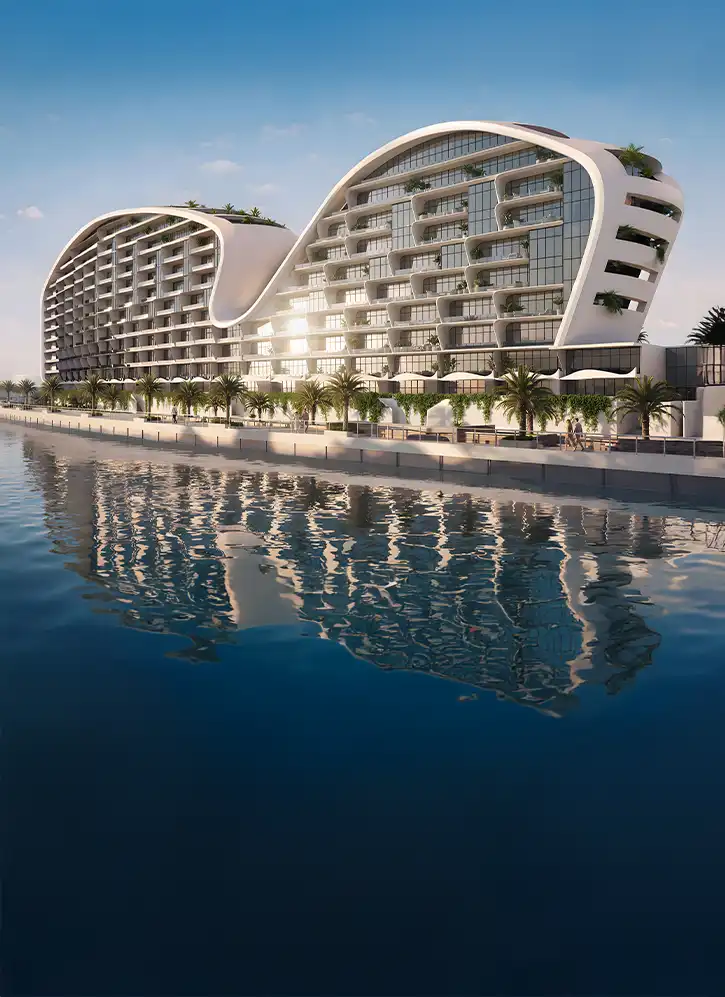 Project in this article · Al Raha BeachHilton Residences Abu Dhabi Al RahaPrice from AED 2,500,000 · Emirates DevelopmentsView project
Price from $708,000. Location: Al Raha Beach, Abu Dhabi.
A Hilton branded project on the beachfront, similar in concept to Mercedes-Benz Residences in Dubai. Branded residences are still rare in Abu Dhabi, which gives the project strong potential for investors and for capital preservation.
Radiant Bridges
Price from $408,000 per office. Developer: Radiant Real Estate.
A mixed-use project with residential and commercial property. A similar earlier project sold out very quickly. This time, we have reserved two floors, one residential and one commercial. Most units are already allocated to investors, but some are still available. For commercial property, this is almost the only opportunity in Abu Dhabi right now.
Why we expect growth after the cooling
The Abu Dhabi property market is in a cooling phase. We expect this stage to be short and to be followed by growth.
In previous crises, property in Dubai and Abu Dhabi multiplied in value after periods of instability ended. During uncertain times, buyers have more room to negotiate.
Right now, you can:
- Enter during a mild cooling phase
- Negotiate more favorable terms with developers
- Choose the best units at the construction stage while they are still available
We consider Abu Dhabi the most promising property market in the UAE in 2026, and periods of uncertainty a good moment to enter it.
Visit us at Inside or submit a request for a consultation.
Sources
- Numbeo

Written by
Inside EditorialMarket reviews and news by the Inside Realty team · 15 articles